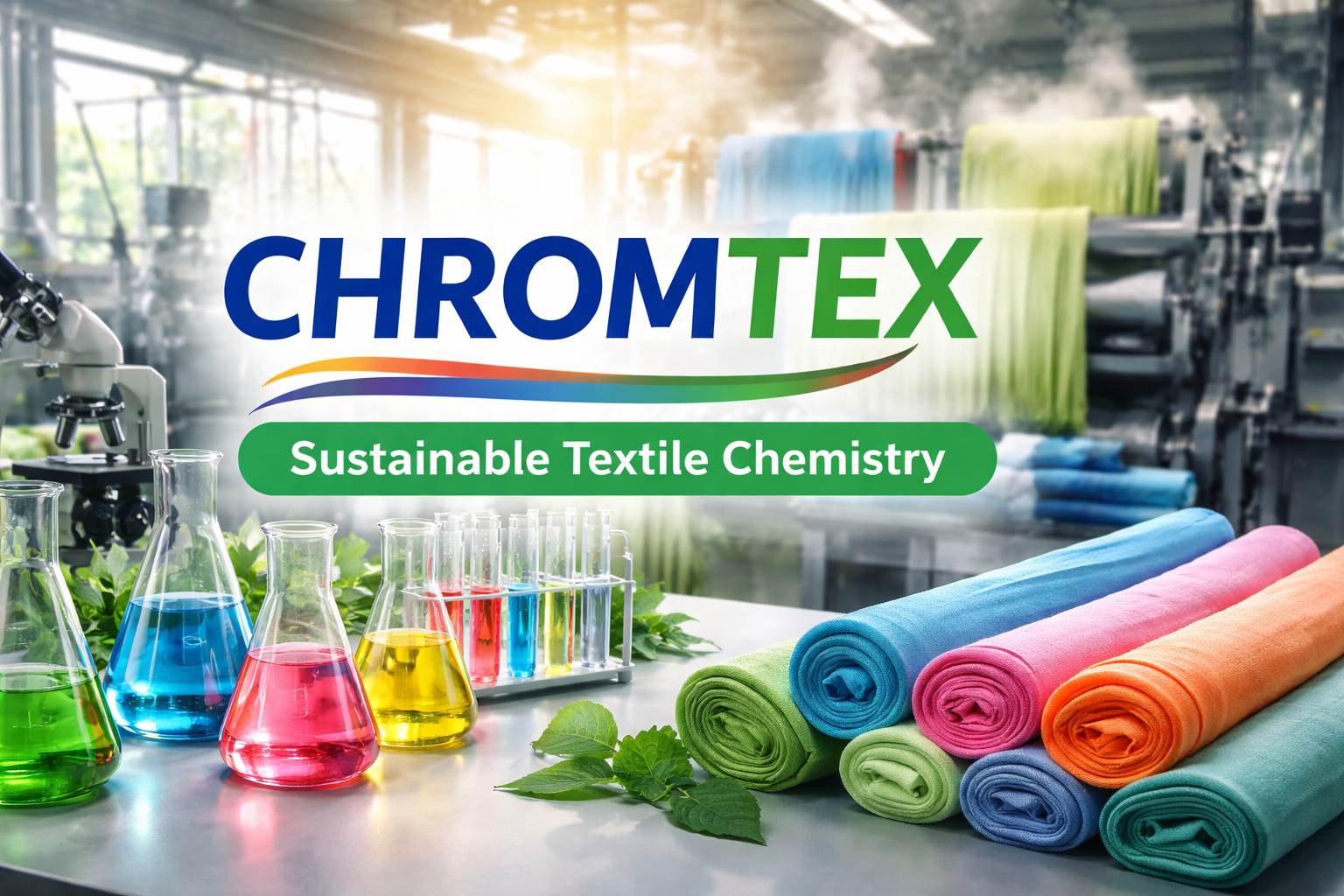
Introduction
In an era where the demand for superior textile quality and environmentally conscious manufacturing is greater than ever, Chromtex stands out as a name synonymous with innovation, reliability, and sustainable impact in textile chemistry. Often discussed within industrial circles but less familiar to the general public, Chromtex represents both a brand and a broader system of chemical solutions that enable modern textile producers to meet exacting quality standards while minimizing environmental footprints. Its presence is felt across pre-treatment, dyeing, and finishing processes—a journey that every fabric undergoes before reaching a garment rack or home furnishing store. Through a fusion of scientific expertise and practical industry insights, Chromtex bridges the gap between traditional textile processing and forward-looking, eco-responsible production practices.
What Is Chromtex
Chromtex is a specialized textile chemicals brand primarily associated with the manufacture and supply of auxiliary chemicals used in fabric processing. It is not a single product but a portfolio of scientifically designed formulations that assist textile mills in every crucial stage of production—from preparing raw fibers and yarns to dyeing them with precise, long-lasting colors, and finally enhancing texture, resilience, and hand feel during finishing. As textile manufacturing has evolved, the significance of chemical solutions like those offered by Chromtex has grown exponentially, helping producers to achieve uniform quality, environmental compliance, and process efficiency. The brand is most closely associated with Chromatex Chemicals Pvt. Ltd., a Pakistan-based manufacturer serving both domestic and international textile markets.
READ MORE: pxless: Rethinking Responsive Design Without Pixels Mastery
The Vital Role of Chromtex in Textile Manufacturing
To truly appreciate Chromtex’s place in the textile world, one must understand the complexity of fabric production. Textile manufacturing isn’t just about weaving or knitting fibers; it’s a multifaceted process in which chemicals play indispensable roles at each stage. Pretreatment chemicals prepare fibers by removing impurities and adjusting pH levels so that dyes and finishes can be applied evenly and effectively. Dyeing auxiliaries—another key segment of Chromtex’s offerings—ensure that colorants bond consistently, achieve uniform depth of shade, and maintain fastness after repeated use and wash cycles. Finally, finishing agents enhance tactile properties such as softness, strength, and resistance to wear, which directly affect the consumer experience of the end product. Without these carefully engineered chemical helpers, fabric quality would suffer, production costs would rise due to higher defect rates, and the environmental impact could be far greater.
Origins and Growth of Chromtex
Chromtex’s story emerges from the textile hubs of South Asia, where a burgeoning manufacturing sector has long sought chemical solutions that are both high-performing and tailored to local needs. Companies operating under the Chromtex brand, particularly Chromatex Chemicals Pvt. Ltd., began with a vision to provide cost-effective, research-driven chemical formulations that would improve production outcomes without burdening mills with prohibitive costs or environmental hazards. Over time, Chromtex grew from serving local textile operations to becoming a recognized partner for mills and processing houses beyond the borders of Pakistan, tapping markets in the Middle East, Africa, and parts of Asia.
Core Product Categories and Technical Expertise
At the core of Chromtex’s business is its comprehensive product range designed to support all stages of textile production. Pretreatment products include enzymes, wetting agents, stabilizers, and pH regulators that prepare fibers such as cotton, polyester, and blends for dyeing by ensuring uniformity and cleanliness. These early steps are vital because any inconsistency at the beginning of the process can lead to defects later on. Chromtex dyeing auxiliaries are formulated to enhance dye uptake and color retention, helping fabrics display vibrant hues that resist fading. In the finishing category, chemicals add performance attributes such as softness, anti-wrinkle behavior, and enhanced strength—all of which influence customer satisfaction and product longevity.
Commitment to Sustainability and Global Standards
One of the most distinguishing features of Chromtex’s approach lies in its commitment to sustainability. Modern textile production faces significant scrutiny from regulators, consumers, and global brands regarding environmental impact. Chromtex has responded by aligning many of its formulations with internationally recognized environmental standards—ensuring compliance with certifications such as ISO 9001:2015 for quality management and ISO 14001 for environmental management, alongside broader industry frameworks like ZDHC Level 3 and OEKO-TEX® Standard 100. This positions Chromtex not just as a chemical supplier, but as a partner to textile mills striving to meet the sustainability expectations of contemporary markets.
Technical Services and Customer Support
Beyond the chemicals themselves, Chromtex often provides essential technical support to manufacturing partners. This includes advising on optimal dosages, assisting with process adjustments based on fiber type or machinery, and troubleshooting issues that can arise during batch processing. Textile chemistry is a nuanced science where even minor variations in temperature, pH, or application method can affect outcomes. Chromtex’s capacity to offer on-site or remote guidance helps mills optimize operations, reduce waste, and achieve consistent quality—an invaluable support system in an industry where efficiency and predictability are closely tie to profitability.
Global Presence and Market Integration
While rooted in South Asia, Chromtex has broadened its reach through strategic partnerships, distributors, and export networks that connect it to markets across regions such as the Middle East, Africa, and South Asia. This global footprint ensures that textile producers of varying sizes—from small fabric processors to large export-oriented mills—can access Chromtex products and support. By understanding the specific demands of these diverse markets, Chromtex facilitates a smoother exchange between chemical technology and textile production needs, fostering growth within the global textile value chain.
Challenges and Future Outlook
Despite its success, Chromtex operates in a competitive and rapidly evolving industry. Global textile markets are continually shape by technological advancements, shifting consumer expectations, and tightening environmental regulations. To stay ahead, Chromtex invests in ongoing research and development, exploring new chemistries that enhance performance while reducing ecological impact. Emerging areas such as enzyme-based pretreatment processes, low-temperature dyes, and formulations designed for water-less or energy-efficient production methods represent potential game-changers in textile chemistry—areas where Chromtex aims to maintain a leadership role.
Conclusion
Chromtex exemplifies how specialized chemical solutions can elevate textile manufacturing, delivering both technical excellence and environmental responsibility. Its comprehensive range of auxiliary chemicals, backed by a commitment to sustainability and quality, has made it an indispensable partner for textile producers seeking reliable performance across pretreatment, dyeing, and finishing processes. As the industry continues to evolve under the pressures of global demand and environmental accountability, Chromtex’s innovations and detailed understanding of textile chemistry will remain at the forefront of responsible, high-quality fabric production.
FAQs
What industries rely on Chromtex products?
Textile mills, garment manufacturers, and fabric processors across woven, knit, denim, and blended materials use Chromtex solutions to improve quality and process efficiency.
Does Chromtex focus on sustainability?
Yes, Chromtex aligns many formulations with environmental standards such as ZDHC and OEKO-TEX®, supporting eco-friendly production.
How does Chromtex influence fabric quality?
By enhancing dye uptake, pH stability, and finishing performance, Chromtex chemicals directly contribute to uniform colors, durability, and tactile properties.
Is Chromtex limite to Pakistan?
No, while it has roots in Pakistan, Chromtex has distribution networks and partnerships across several global markets.
Can Chromtex chemicals reduce production costs?
Optimized chemical formulations and technical support from Chromtex can reduce waste, improve efficiency, and lower rework costs in textile processing.